Debit Card Binary Options Brokers
Debit cards are accepted by most binary brokers we’ve tested. This guide explains how debit cards work, their pros and cons for funding trading, plus how they compare to alternative payment options.
We’ve also listed the best binary options brokers that accept debit card deposits. We confirmed each binary platform allows debit card payment by finding the option in client cabinets or checking with customer support. We then ranked brokers by their overall ratings, assigned during our in-house tests.
Binary Brokers with Debit Card
| Broker | Min Deposit | Expiry Times | ||
|---|---|---|---|---|
 |
AZAforex | $1 | 30 seconds - 1 day | » Visit |
 |
Crypto.com | Varies by payment method | 5 minutes to event cutoffs, can be hours, days and longer depending on contract | » Visit |
 |
Binarium | $5 | 60 seconds - 3 months | » Visit |
 |
Pocket Option | $5 | 3 seconds - 4 hours | |
 |
Quotex | $10 | 5 seconds - 4 hours | |
 |
OlympTrade | $10 | 5 seconds - 23 hours | |
 |
GC Option | $10 | 1 minute - 48 hours | |
 |
Dukascopy | $100 | 3 minutes - 22 hours 59 minutes | |
 |
BinaryCent | $250 | 5 seconds - 30 days | |
 |
World Forex | $1 | 1 minute - 7 days |
Visit
What Is A Debit Card?
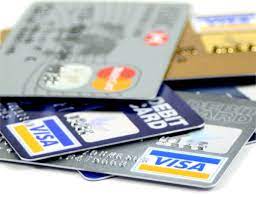
Debit cards are a way of paying for goods and services by withdrawing funds from a bank account that contains money belonging to the account holder.
Debit cards themselves are issued by banks and financial institutions, and many of them run on Visa or Mastercard networks.
Traders can apply for a debit card by opening a current account with a bank or alternative card provider. This can be done online or in person. It usually takes several business days for a physical card to be delivered to the account holder.
Importantly, the card allows the owner to pay for goods online or in-store using the balance in their account. And unlike a credit card, account holders can’t spend money they don’t have unless they open an overdraft facility, which comes with fees.
When depositing to a binary options broker using a debit card, you will generally be asked to input the long card number, expiry date, and security code in the cashier portal. We provide step-by-step instructions on the process further below.
History & Uses
The Bank of Delaware piloted the debit card as early as 1966, with several other banks following suit in the 1970s. Over the decades, debit cards gained popularity as ATMs became more readily available.
Importantly however, prepaid cards and debit cards are different. Debit cards are linked to a bank account, whereas prepaid cards hold funds that have been previously deposited into the card – similar to a gift card, so can be used without a bank account.
In the early days, banks would charge users to own a debit card, however, as merchants began paying financial institutions to process card transactions, fees slowly went away. This helped accelerate the growth of debit cards, which are now available in nearly every country in the world.
Their widespread popularity also means that many of the best binary options brokers accept debit card deposits. And while often provided for free by the bank, trading platforms can have different payment limits and fees.
Transaction Times
Debit card payments are usually processed almost immediately, meaning investors can start trading binary options straight away. Yet while deposits are usually instant, sometimes they may be declined or delayed by issuer fraud controls or broker checks.
Withdrawals using debit cards can take longer. This is due to security checks and Know Your Customer (KYC) requirements. Deriv processes withdrawals in 24 hours, for example, while OlympTrade takes around 3 days, and IQ Option takes around 3 working days. All these brokers note it can take longer to receive funds, however.
If a deposit or a withdrawal is taking longer than expected, contact your broker’s customer support team or the card provider directly.
Pricing Review
Fees vary depending on your location, card provider and trading broker. There may be an interchange fee that is charged to the merchant (the broker) and passed on to the trader.
That said, most of the debit card binary platforms we’ve reviewed do not charge additional fees for using cards. Still, we recommend checking the broker’s deposit and withdrawal page for information on fees.
Security
Whilst debit cards and their respective providers are usually reputable, there is a risk when handing over your card details to unknown binary options brokers. With this in mind, it’s important to sign up with a reliable brand. See our list of recommended firms with good reviews from our experts.
For an extra layer of security, investors can also connect their debit card to a PayPal, Google Pay or Apple Pay accounts. These solutions often offer 2-factor-authentication (2FA) and allow traders to deposit with their binary broker without sharing the card details linked to their bank account.
Binary brokers may set a transaction or withdrawal limit to minimize the risk of a trader’s profits being drained if their account is hacked.
Regulation
Debit card issuers are regulated by different bodies and subject to various rules. Below are some of the key licenses and requirements.
- Visa (global card scheme rules) – Visa Core Rules and Visa Product and Service Rules (Visa rules (public PDF))
- Mastercard (global card scheme rules) – Mastercard Transaction Processing Rules (Transaction processing rules (PDF))
- UK (FCA) – Payment Services Regulations 2017 & Electronic Money Regulations 2011 overview (FCA: payment services & e-money regulation)
- EU – PSD2: Directive (EU) 2015/2366 on payment services (EUR-Lex: PSD2)
- US – Electronic Fund Transfer Act (EFTA) / Regulation E consumer protections (FDIC summary (PDF))
- Canada – Code of Conduct for the Payment Card Industry in Canada (FCAC) (FCAC: Code of Conduct)
Just because your debit card issuer is regulated, this does not mean your binary broker that uses the payment method is.
Debit Cards Vs Other Deposit Options
Debit Card Vs Credit Card
Debit cards and credit cards are similar. The main difference is that with credit cards, you borrow funds from your bank which you pay back later, often with interest. With debit cards, you spend only what you have already deposited into your bank account.
Credit cards can also help build credit scores and offer rewards like discounts on shopping, air miles or gift cards to retailers. In addition, credit cards can help protect against fraud and it’s easier to dispute and recover a payment if a transaction goes wrong. This makes credit cards an attractive option to some binary traders as there are some fraudulent operators online.
But while the opportunity to spend what you don’t currently have can be tempting, trading binary options with a credit card is highly risky. Traders should only risk what they can afford to lose.
Debit Card Vs Bank Transfer
Bank transfers often take longer to process than debit card transactions, as well as coming with additional costs which brokers tend to pass on to traders.
As a result, debit cards are often cheaper way to fund binary options activity, from making deposits to withdrawing profits.
Pros Of Using Debit Cards For Trading Binaries
- Near-instant deposits at the top brokers
- Available at many banks and providers
- Less risk of debt compared to credit cards
- Typically limited additional fees are incurred
Cons Of Using Debit Cards For Trading Binaries
- Limited rewards for usage compared to credit cards
- Less security and chargeback options compared to credit cards
How To Make Debit Card Deposits & Withdrawals
Firstly, open a binary options account with a broker that supports debit card payments. Before you sign up, check for any fees and payment timelines.
Once your account is live, head to your account area via the broker’s website or trading app. Navigate to the deposit and withdrawal page and select debit card from the list of supported solutions (most brokers we’ve tested accept Visa and Mastercard deposits).
Next, enter the amount you wish to deposit (taking note of any minimum payment requirements) and input your card details, including the long card number, expiry date and CVV code (usually found on the back of the card).
Finally, check the details are correct and confirm the payment. Your funds should be visible in your account balance.
Note, most brokerages allow you to save your card details for next time.
Bottom Line
Debit cards can be used to fund trading activity at most binary options platforms. Deposits are normally fast and fee-free while withdrawals generally take a couple of working days.
You can find out more about a specific broker’s payment conditions, including any minimum deposits and transaction fees, on their official site. Alternatively, see our detailed reviews. We have also compiled a list of the top binary options brokers that accept debit card deposits.
FAQ
Are Debit Cards Safe For Binary Trading?
Debit cards and issuers are often highly regulated. It is difficult to access a bank account that is connected to a debit card unless you are the account holder.
With that said, traders should always be careful when sharing their card details with binary options brokers. Make sure you sign up with a trusted and reliable trading platform.
Do I Need To Pay To Make A Deposit To My Binary Options Account Using A Debit Card?
Whether a binary options broker charges a fee for the use of a debit card varies. With that said, debit card transactions are normally free. In some countries, notably the EU and UK, merchants cannot surcharge consumer cards, though elsewhere it may be allowed.
Broker and platform fees may still apply. This fee is usually a small percentage of the money you deposit or withdraw.