NFP in Focus as Shutdown Delay Raises Volatility Risks
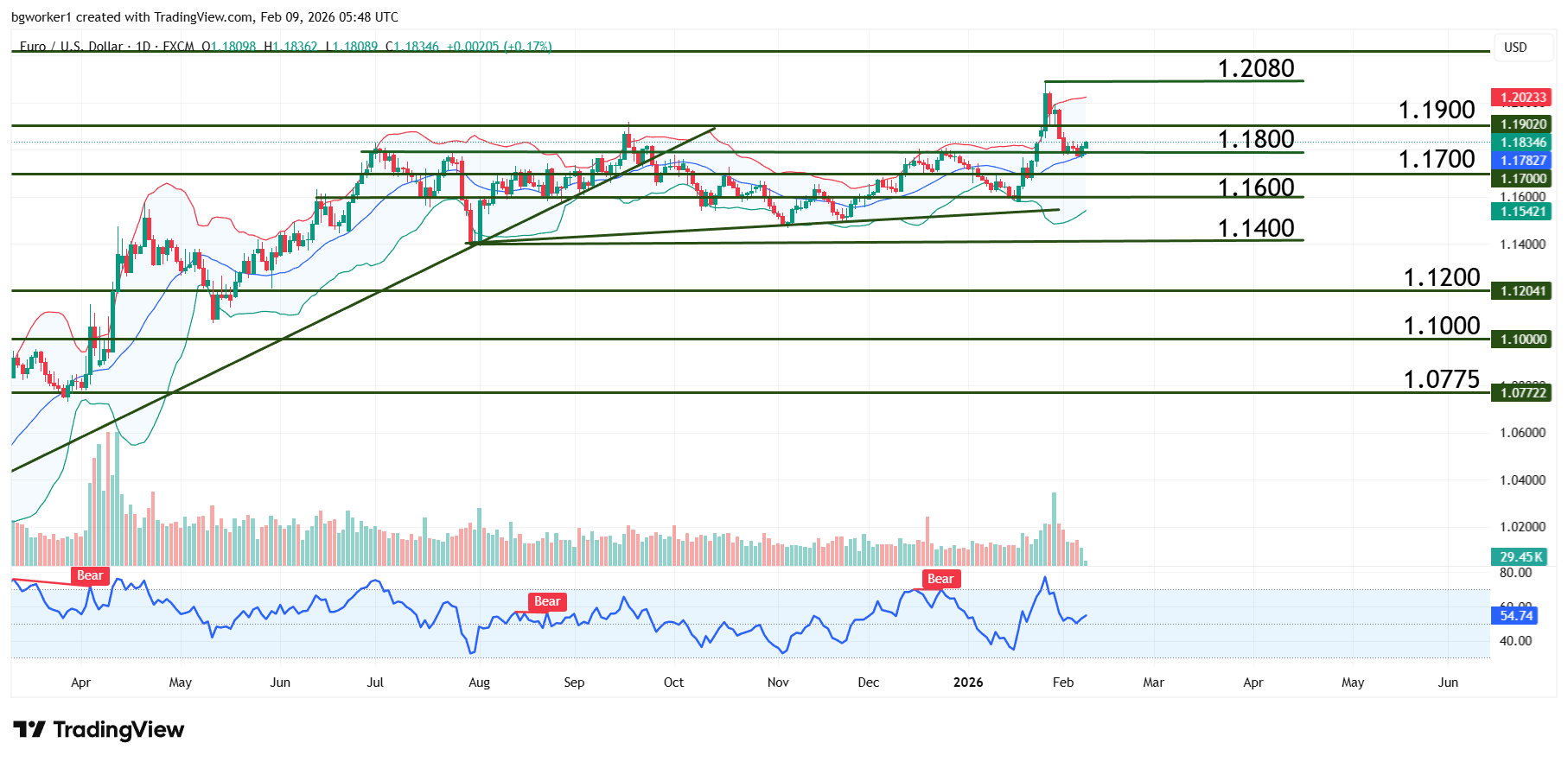
EUR/USD rejected at 1.1800 but technical bias favors further downside
On Friday, the dollar retreated from a two-week high, following a rebound in risk assets. Data showed that U.S. consumer sentiment is improving, and the U.S. Non-Farm Payrolls report was delayed to this week due to a new government shutdown.
The trigger for the dollar’s recovery from 1.2080 highs was President Trump’s nomination of Kevin Warsh as the next Federal Reserve Chair. Warsh is not seen as a supporter of big rate cuts, and a higher rate gives fuel to the dollar. At the time of writing, the CME FedWatch tool still shows the first rate cut in June, with a 49.2% probability.
The ADP Non-Farm Employment Change released last week showed that job creation in the U.S. is slowing down, but the big one, the NFP, is due for release this week. If the report misses expectations or if there are major downward revisions to the previous report, this would put pressure on the Fed to cut rates sooner rather than later.
Economic Calendar Highlights
The first notable event of the week will be the release of the U.S. Retail Sales, scheduled for Tuesday at 1:30 pm GMT. Sales made at retail levels represent the main part of consumer spending, which in turn represents the biggest part of the overall economic activity.
The Non-Farm Payrolls (NFP) report will come out on Wednesday at 1:30 pm GMT, alongside the Average Hourly Earnings and the Unemployment Rate. The previous figure was 50K, and the forecast is 70K. Numbers below 70K would be viewed as bearish for the US Dollar, and the same is true if the previous reading is revised lower.
The economic week will end with the release of the U.S. Consumer Price Index (CPI) and Core CPI, scheduled on Friday at 1:30 pm GMT. This is the main gauge of inflation and is directly tied to the Fed’s rate policy as part of the dual mandate to keep job creation high and inflation around 2.0%. Given that this week we take a look at both inflation and jobs, we will probably see a lot of volatility.
Technical Outlook – EUR/USD
The dollar gave back some of the gains of last week, but overall it is still on a recovery path as it nullified most of the euro’s advancements. The support at 1.1800 rejected falling prices, but this looks more like a temporary rebound.
A break below the support at 1.1800 will add more sellers to the mix, opening the door for a move towards the lower Bollinger Band. If such a move develops, it will take several weeks because the lower band is currently at 1.1530.
The RSI supports a move lower because it was recently overbought, and the return from that territory was strong and fast. It is currently moving lower, without showing major signs of reversal. The fundamental scene could alter this bullish USD scenario, so keep an eye on the data that’s coming out this week.