Markets Turn Risk-Off as Peace Talks Break Down Again
EUR/USD tests support as Fed and ECB are set to hold rates steady
The Middle East conflict continues to dictate the market mood, and the latest failed round of peace talks boosted demand for safe-haven assets. US envoys Steve Witkoff and Jared Kushner were supposed to head to Pakistan for negotiations with Iranian representatives, but on Saturday, President Trump cancelled the trip, calling it a waste of time.
In a TruthSocial post, the US President said, “Too much time wasted on traveling, too much work!” and added, “Also, we have all the cards, they have none! If they want to talk, all they have to do is call!!!”
Economic Calendar Highlights
It’s a busy week for central banks, with multiple rate decisions, although none of the three major banks are expected to change their rates. The Federal Reserve will announce the interest rate on Wednesday at 6:00 pm GMT, but the more important part will be the press conference scheduled half an hour later.
This could be Powell’s last press conference as Fed Chair because his term will end in mid-May. However, the designated successor, Kevin Warsh, hasn’t been fully confirmed yet. If Warsh is not fully confirmed by the time of the next Fed rate Meeting, then Powell will likely stay as Chair for longer and will hold another press conference.
The Bank of England will announce the interest rate on Thursday at 11:00 am GMT, with no change expected from the current 3.75%. The European Central Bank (ECB) will follow suit shortly after, at 12:15 pm GMT, again with no change expected (current rate: 2.15%). ECB President Christine Lagarde will hold a press conference at 12:45 pm GMT.
The US Core PCE Price Index will be released on Thursday at 12:30 pm GMT, offering insights into the US inflation. The PCE is considered the Fed’s preferred inflation gauge, but it is overshadowed by the CPI, which is usually released about 10 days earlier.
Technical Outlook – EUR/USD
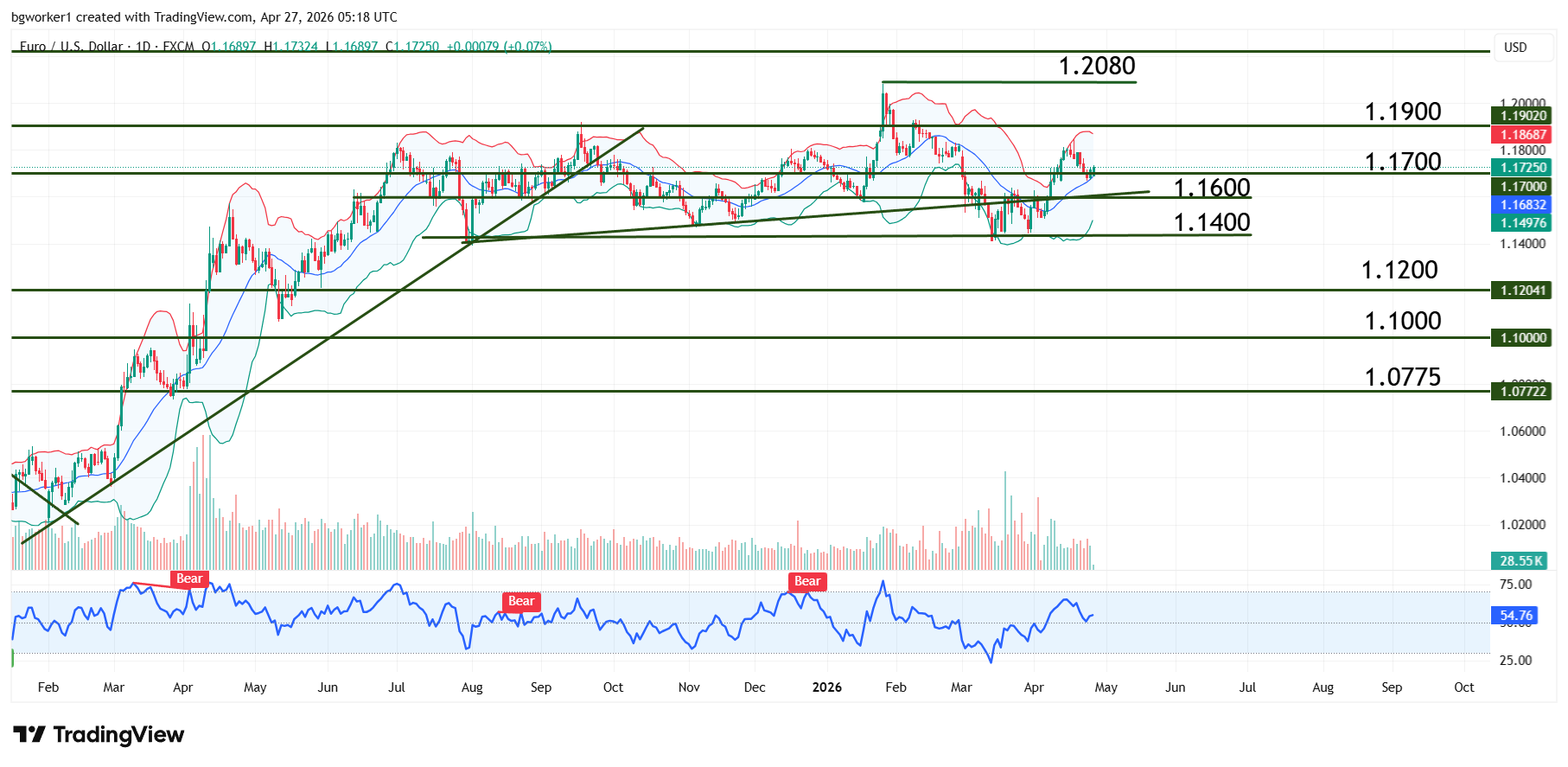
The range between 1.1900 and 1.1400 is still intact and the pair’s last move is a drop from the upper part of the range (returning lower after reaching a high at 1.1850). Currently, the dollar bulls are trying to break the support at 1.1700, and a successful attempt will probably send the pair closer to the lower Bollinger Band.
On the other hand, a bounce from the current zone would mean that the pair is headed towards the top of the range again. The RSI has turned lower, but there is no bearish divergence to give a clear signal. The Middle East conflict will heavily affect the dollar’s path going forward, lowering the impact of the technical factors.